

Whether you are entering the Saudi market, expanding your operations, signing contracts with local partners, or complying with government requirements, the need for business document translation Saudi Arabia is inevitable.

Why Business Document Translation Saudi Arabia Matters?
Saudi Arabia has a unique linguistic and regulatory landscape. While English is commonly used in international business circles, Arabic remains the official language for government transactions, legal proceedings, and many corporate activities. This makes business document translation Saudi Arabia a crucial requirement for:
- Legal compliance with governmental and regulatory bodies.
- Contractual clarity with local partners and employees.
- Accurate communication in financial, technical, and commercial documentation.
- Effective marketing and brand messaging for Saudi audiences.
Professional translation goes beyond merely converting words from one language to another. It preserves meaning, tone, context, and industry-specific terminology. This is especially important in sectors like finance, law, healthcare, engineering, and technology, where misinterpretation can have serious consequences.
Businesses that invest in high-quality translation can protect their reputation, minimize costly errors, and build trust with stakeholders. The value of accurate business document translation Saudi Arabia extends far beyond basic necessity; it becomes a strategic asset in establishing credibility and facilitating cross-border collaboration.
Types of Business Documents That Require Professional Translation
Understanding the types of documents that often require translation helps companies prepare and manage their operations efficiently. The following categories illustrate the breadth of documentation commonly translated in the Saudi business context:
1. Legal and Corporate Documents
Legal translation is among the most critical aspects of business document translation Saudi Arabia. This includes contracts, memoranda of understanding, shareholder agreements, licensing documents, and terms of service. Legal translations must precisely reflect original meanings and adhere to Saudi legal terminology to prevent disputes and ensure enforceability.
2. Financial and Accounting Reports
Financial documentation such as balance sheets, audit reports, tax records, and annual reports must be translated accurately, especially when submitting these documents to banks, investors, or regulatory agencies that operate in Arabic. Precision here ensures transparency and compliance.
3. Commercial and Business Proposals
Proposals, business plans, investment prospectuses, and pitch decks intended for Saudi partners or investors require language that is persuasive, culturally appropriate, and professionally articulated. Translation here involves creative adaptation as much as linguistic accuracy.
4. Marketing and Advertising Content
Business documents aimed at marketing, including branding materials, product descriptions, campaigns, websites, and social media content, must resonate with Saudi audiences. Effective business document translation ensures that marketing messages are culturally sensitive and compelling.
5. Human Resources and Employment Documents
Employee handbooks, employment contracts, training manuals, performance evaluations, and workplace policies must often be translated into Arabic for local staff or to comply with labor regulations.
6. Technical and Engineering Documentation
For industries like construction, oil & gas, and technology, manuals, technical specifications, and safety procedures must be translated with strict attention to technical language to maintain clarity and safety standards.
7. Intellectual Property and Trademark Documentation
Applications for trademarks, patents, and brand registrations need precise translation to ensure protection under Saudi law and a clear understanding by local examiners.
From contracts to corporate policies, understanding the range of business document types underscores the importance of specialized translation services for companies operating in the Kingdom.

How Business Document Translation Works in Saudi Arabia
The process of translating business documents professionally involves several stages designed to ensure accuracy, consistency, and relevance. Here’s an overview of how translation services typically work:
1. Document Assessment
The process begins with a comprehensive review of the documents to be translated. Service providers analyze the type of content, language complexity, industry specifics, and deadline requirements to determine project scope.
2. Translator Selection
Qualified translators are assigned based on their expertise in the relevant domain. For example, legal translators handle contracts, while financial translators deal with financial reports. This specialization improves accuracy.
3. Translation
The assigned translator converts the content from the source language to the target language. Emphasis is placed on keeping the meaning intact, using correct terminology, and adapting language to local Saudi norms where necessary.
4. Review and Editing
A separate linguist or editor reviews the translation to catch errors, improve phrasing, and ensure consistency throughout the document. This quality control step is vital for professional results.
5. Final Proofreading
Final proofreading checks grammar, punctuation, formatting, and cultural appropriateness. It ensures the translated document is publication-ready and meets client expectations.
6. Delivery and Feedback
Once approved internally, the final translation is delivered in the agreed format. Feedback loops allow clients to request revisions if needed.
Read more about: Notarized translation services in Saudi Arabia for startups!
Is Business document translation Saudi Arabia online?
Yes, it is available, and here are the required steps:
- You upload your business documents (Word, PDF, or scanned files) through an online platform or email.
- You select the language pair (for example, English–Arabic or Arabic–English) and specify whether certification is required.
- Professional translators with business and industry expertise handle the translation, followed by editing and proofreading.
- The final translated documents are delivered digitally, and certified versions can be provided when needed for official use.
Advantages of online translation services
- Faster turnaround times without geographic limitations
- Secure handling of confidential business information
- Access to specialized translators for legal, financial, and technical content
- Easy scalability for large or ongoing translation projects

Benefits of Professional Business Document Translation
Investing in experienced translation services offers several strategic advantages:
1. Regulatory Compliance
Accurate translations ensure documents are acceptable to Saudi government agencies, courts, chambers of commerce, and licensing authorities.
2. Enhanced Credibility
Clear and professional communication enhances your brand image and builds trust with clients, partners, and investors within Saudi Arabia.
3. Risk Reduction
Translation errors can lead to financial loss, legal disputes, or reputational damage. Professional services mitigate these risks.
4. Improved Market Reach
Translation that respects local language nuances and cultural sensibilities resonates more deeply with Saudi consumers and business stakeholders.
5. Competitive Advantage
Companies that communicate clearly in Arabic can outperform competitors who rely on automated tools or inadequate translation methods.
Discover: Starting a Company in Saudi Arabia: Complete Setup Guide
Challenges in Business Document Translation and How to Overcome Them
Despite the clear benefits, translation projects can encounter challenges. Understanding these challenges helps companies plan effectively:
1. Language Nuances
Arabic grammar, dialects, and formal language conventions differ from English and other languages. Skilled translators are required to navigate these nuances.
2. Technical Terminology
Business language often includes industry-specific jargon. Professional translators must understand the subject matter to avoid inaccuracies.
3. Cultural Context
Translation isn’t just words; it’s meaning. Cultural context affects tone and interpretation. Local expertise ensures the message aligns with Saudi cultural norms.
4. Consistency Across Documents
Companies often produce multiple documents for internal and external use. Maintaining consistent terminology across all translations is essential. Expert translation teams use glossaries and memory tools to achieve this.
5. Confidentiality and Security
Business documents often contain sensitive information. Trusted translation partners implement robust security measures to protect client data.
By anticipating these challenges and choosing professional translation partners, businesses can ensure that their translations are effective, accurate, and strategically valuable.
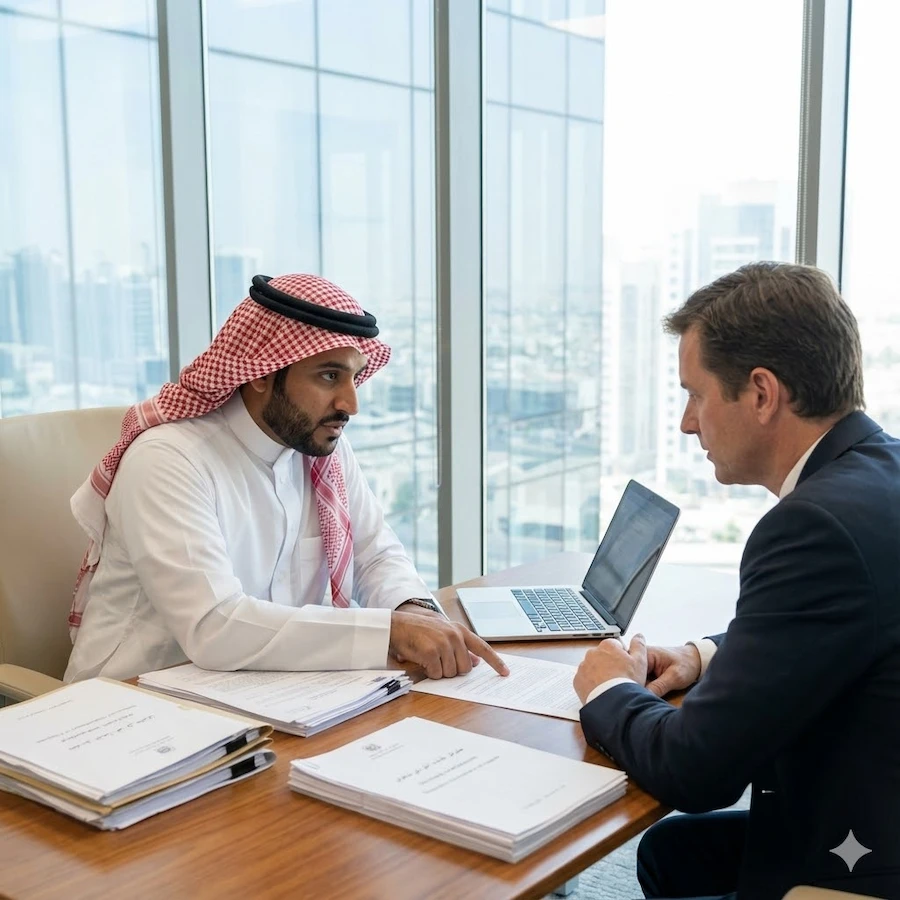
What to Look for in a Business Document Translation Provider?
Choosing the right translation service provider is as important as the translation itself. Here’s what to prioritize when seeking business document translation Saudi Arabia:
1. Certified Expertise
Look for translators with official certifications and proven experience in legal, financial, technical, or business translation fields.
2. Native Language Proficiency
Translators should be native speakers or have near-native fluency in both source and target languages to ensure linguistic accuracy.
3. Industry Knowledge
Translation services should demonstrate experience in your specific industry, whether finance, law, engineering, or marketing.
4. Quality Assurance
Top providers implement rigorous review and quality control processes to eliminate errors and ensure consistency.
5. Confidentiality Protocols
Strong security and confidentiality measures protect your documents throughout the translation process.
6. Timely Delivery
Business deadlines matter. Reliable providers respect turnaround times without sacrificing quality.
Cases For Business Document Translation Saudi Arabia
Real-world scenarios where translation services are indispensable include:
1. Establishing a Saudi Branch
Foreign companies setting up operations in Saudi Arabia must translate incorporation documents, licensing forms, and regulatory filings.
2. Signing Contracts with Local Partners
All agreements intended for execution in Saudi Arabia are more enforceable when translated and, when required, certified.
3. Submitting Financial Records
Financial statements presented to Saudi banks or investors should be professionally translated to ensure clarity and compliance.
4. Marketing to Saudi Audiences
Localized brochures, websites, ads, and product descriptions facilitate customer engagement and improve brand perception.
5. Regulatory Compliance
Documents submitted to ministries or government entities must often be in Arabic or accompanied by certified translations.
These use cases illustrate how integral translation is to a range of corporate objectives.

Emerging Trends in Business Document Translation
As business evolves, so does the translation industry. Notable trends include:
1. Technology-Enhanced Translation
Translation memory and terminology databases improve consistency across large document sets. Higher quality outcomes are achieved when human expertise is paired with translation tools.
2. Increased Demand for Multilingual Capabilities
As global commerce expands, companies require translation into multiple languages beyond Arabic and English, including Chinese, French, Spanish, and more.
3. Cultural Localization
Effective translation now involves cultural adaptation, ensuring messages resonate in the target market beyond literal word conversion.
4. Integrated Translation Services
Leading providers offer a mix of services, including localization, proofreading, interpretation, and multimedia adaptation to support comprehensive business communication strategies.
Frequently Asked Questions
What is the difference between certified and non-certified business document translation?
Certified translation is officially recognized by government authorities, courts, and institutions, whereas non-certified translation is suitable for internal use or informal communication.
How long does professional business document translation typically take?
Turnaround time depends on document length, complexity, and language pair, but professional services aim to meet business deadlines efficiently.
Can machine translation be used for business documents in Saudi Arabia?
Machine translation can assist understanding, but it is not reliable for professional, legal, or official documents without human review.
Do translated documents need to be notarized or legalized in Saudi Arabia?
Some official documents require notarization or attestation after translation to be accepted by government entities or legal bodies.
How do companies ensure terminology consistency across multiple translated documents?
Translation memory systems and glossaries help maintain consistent terminology, especially for complex business terms.
Learn more about: Visa translation services Saudi Arabia for smooth approval
Conclusion
In an increasingly interconnected world, effective communication in the local language plays a pivotal role in business success. Business document translation Saudi Arabia is more than a language service; it is a strategic investment in compliance, reputation, and market penetration.
Expand in the Saudi market with confidence. Choose Motaded for expert business document translation Saudi Arabia and communicate without barriers.