

Essential Steps for Business Setup in KSA
Setting up a business in Saudi Arabia (KSA) is an exciting opportunity. The region offers a dynamic market with vast potential. For many investors, KSA business setup offers clear pathways to scale.
Saudi Arabia's Vision 2030 initiative is transforming the economic landscape. It aims to diversify the economy and reduce oil dependency.
This guide will walk you through the essential steps for business setup in KSA. From understanding legal requirements to choosing the right business structure, we've got you covered.
Navigating the business setup process in KSA can be complex. However, with the right information, it becomes manageable.
We'll explore the role of business setup consultants in KSA. Their expertise can ensure a seamless business setup in KSA.
Understanding the Saudi Arabian taxation system is crucial. It impacts your business's financial planning and compliance.
Cultural understanding is key to successful business dealings in Saudi Arabia. Adapting to local customs can enhance your business relationships.
If you plan to setup business in KSA, early preparation and clear timelines will help you move efficiently through each step.
Join us as we delve into the opportunities and challenges of setting up a business in KSA.
Summary
This guide covers how to establish a business in Saudi Arabia end-to-end: selecting the right structure (LLC, joint venture, or sole proprietorship), securing the MISA license, Commercial Registration, and Chamber of Commerce registration. It explains sector-specific licensing, core tax and finance obligations (VAT, corporate tax, zakat), and hiring aligned with Saudization and labor laws. The content outlines opportunities under Vision 2030, common challenges, compliance and risk management practices, and the value of engaging local consultants. It also highlights the startup ecosystem, illustrative case studies, and future trends shaping the Saudi market.
Why Set Up a Business in KSA? Economic Landscape and Vision 2030
Saudi Arabia presents a compelling business landscape with strategic benefits. Its central location connects Asia, Europe, and Africa, facilitating global trade.
Vision 2030 is Saudi Arabia's blueprint for economic diversification. The initiative aims to foster growth in non-oil sectors. This opens up new opportunities for entrepreneurs and investors.
Under Vision 2030, the government actively encourages foreign investment. New reforms make business setup in KSA more streamlined and accessible.
Investors are drawn to KSA for its economic stability and growth prospects. The country boasts a robust infrastructure and supportive business environment.
Industries highlighted for development include tourism, entertainment, and technology. This offers a fertile ground for a Saudi Arabia startup and for established businesses alike.
Saudi Arabia offers several benefits for businesses, including:
- A young and skilled workforce
- Access to significant capital markets
- A vibrant startup ecosystem
Foreign investors face opportunities yet must consider potential challenges. Understanding cultural nuances and legal frameworks is vital for success.

Businesses establishing a presence in KSA can leverage a strong economic foundation. The Vision 2030 initiative is pivotal in shaping future business prospects. Embracing these opportunities can lead to prosperous ventures in the Kingdom.
Understanding Business Structures in Saudi Arabia
Choosing the appropriate business structure is crucial for setup in KSA. It affects taxation, liability, and management duties. As part of KSA company formation, aligning structure with your strategy can reduce risk and simplify compliance.
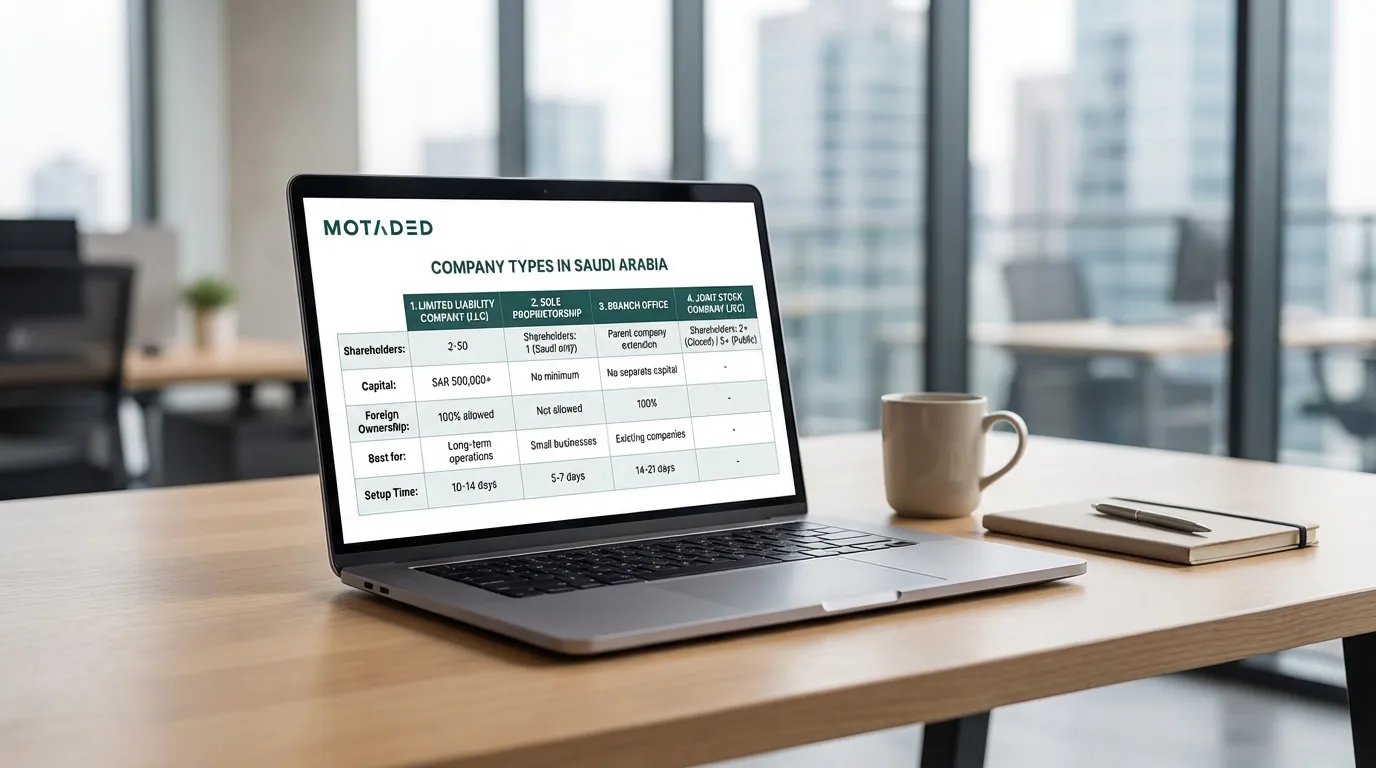
Several business entity types are available in Saudi Arabia. These include Limited Liability Companies (LLC), joint ventures, and sole proprietorships.
The most common business structure for foreign investors is the LLC. It offers limited liability, protecting personal assets from business debts. Many foreign investors opt for a Saudi Arabia LLC under current regulations, given its flexibility and protection.
LLCs require at least two shareholders. They provide a flexible management structure, which appeals to many entrepreneurs.
Another popular option is the joint venture. This involves partnership with a local entity, bringing local market insights.
A sole proprietorship suits small businesses. It is simpler to establish but offers no liability protection.
Each structure has its own benefits and limitations. Careful consideration based on your goals and market is necessary.
Consider these business structures in KSA:
- LLC: Ideal for foreign investors, offers liability protection.
- Joint Venture: Involves local partners, shares resources.
- Sole Proprietorship: Simplest form, no liability shield.

The Ministry of Investment Saudi Arabia (MISA, formerly SAGIA) can assist with selecting the right structure. Their expertise helps align business setup with regulatory norms.
Understanding these structures helps in making informed decisions. This foundational step is key in establishing a successful business in Saudi Arabia.
Key Legal and Regulatory Requirements
Establishing a business in KSA requires understanding key legal obligations. Compliance with regulations ensures smooth operations.
First, securing a Ministry of Investment Saudi Arabia (MISA) license is essential. This license is necessary for foreign investors planning to establish a company.
Next, drafting the Articles of Association is critical. This document outlines the company structure, management responsibilities, and operational guidelines.
Companies must then obtain a Commercial Registration (CR) certificate. This serves as official recognition of the business by the Saudi government.
Another critical step is registering with the Chamber of Commerce. This provides access to valuable business resources and a network of industry professionals.
Labor laws in Saudi Arabia also govern employment practices. These laws protect workers' rights and outline employer obligations.
Legal compliance involves several key steps:
- Obtain MISA license for foreign investment.
- Draft and attest Articles of Association.
- Secure Commercial Registration (CR) certificate.
- Register with Chamber of Commerce.
- Adhere to Saudi labor laws for employment.
By adhering to these legal requirements, businesses can mitigate potential risks. Proper legal guidance is advisable to navigate these regulations effectively. Taking these steps ensures your business aligns with KSA's regulatory framework, promoting long-term success.
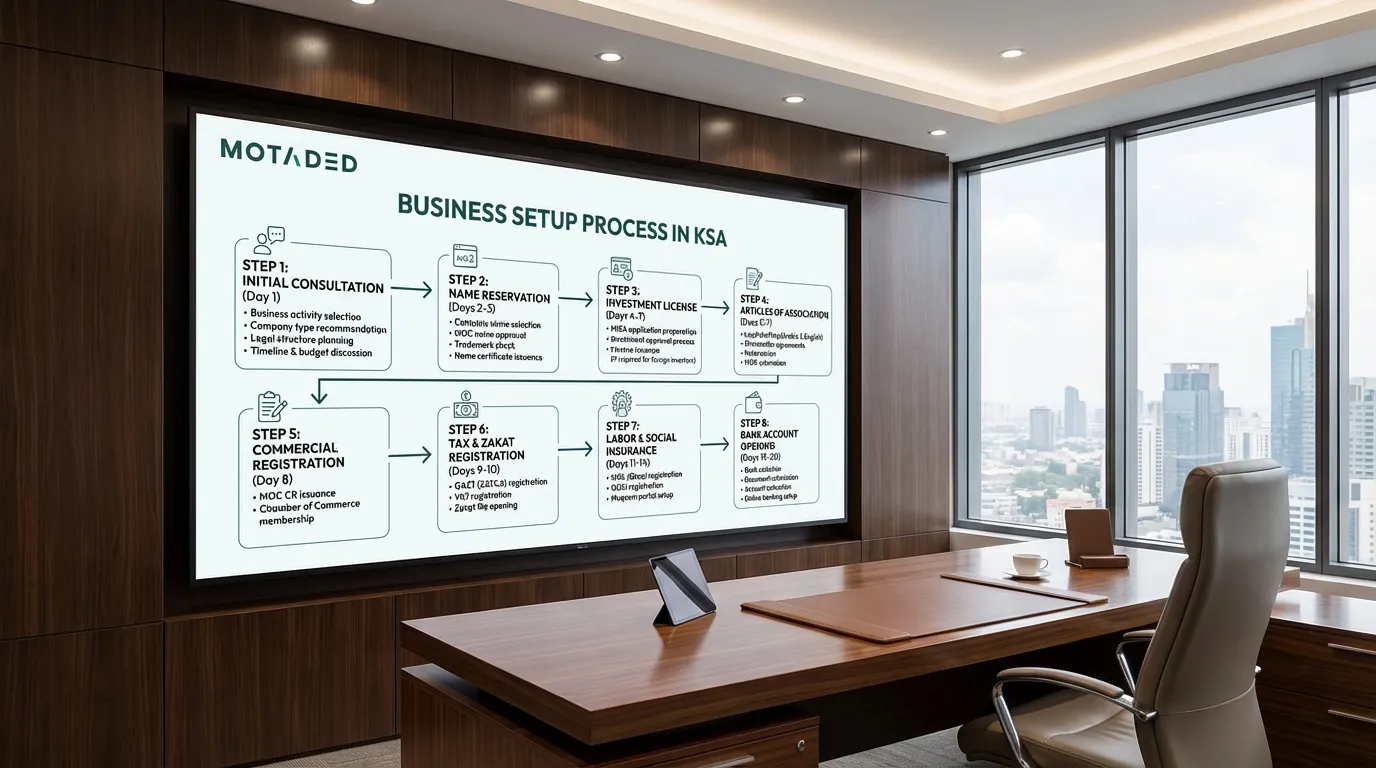
Step-by-Step Guide to Business Registration in KSA
Embarking on business registration KSA requires careful planning and adherence to regulations. Each step is critical to ensure compliance and operational success.
The first step involves selecting an appropriate business name. A unique and culturally appropriate name is vital to the brand's identity in Saudi Arabia.
Next, obtain the necessary licenses and permits. This often requires coordination with several governmental bodies.
Drafting the Articles of Association is a foundational requirement. This document clearly outlines the governance and operational frameworks of the business entity.
Register your business with the Ministry of Investment Saudi Arabia (MISA) for foreign investment approval. This grant allows businesses to leverage local opportunities.
Securing the Commercial Registration (CR) is crucial. The CR certificate legitimizes your business activities within the Kingdom.
Register with the local Chamber of Commerce. This step connects your business to a network of local enterprises and resources.
Ensure compliance with Saudi labor laws when hiring. Understanding these regulations helps navigate the local employment landscape effectively.
These steps apply whether you plan to setup commercial business in KSA or launch a professional services entity.
Choosing and Reserving a Company Name
Selecting a business name involves several considerations. The name should reflect the nature of your business.
Ensure the chosen name complies with KSA guidelines and does not replicate existing names. Check the availability through the Ministry of Commerce and Investment.
Steps for choosing and reserving a name include:
- Selecting a unique name matching the business type.
- Ensuring cultural appropriateness.
- Verifying availability through official channels.
Obtaining the MISA License
Securing a MISA license is a fundamental step for foreign investors. The Ministry of Investment Saudi Arabia facilitates this process to attract global investment.
Applicants must submit detailed business plans and requisite documents. The process requires compliance with Saudi investment regulations.
Important steps for obtaining the MISA license involve:
- Preparing comprehensive business plans.
- Submitting necessary documentation.
- Adhering to MISA guidelines for foreign investors.

Drafting and Attesting the Articles of Association
Creating the Articles of Association forms the legal basis for your company. This document stipulates internal rules and operational frameworks.
Focus on clarity and compliance to avoid potential disputes. Having it legally attested confirms its validity.
Consult with legal experts to draft this document effectively. Their guidance ensures it meets all statutory requirements.
Issuing the Commercial Registration (CR)
Obtaining a Commercial Registration (CR) certificate is necessary for legal recognition. This involves an application to the Ministry of Commerce.
Submission of essential documents verifies the legitimacy of the business. Processing fees and a wait period are generally involved.
Formal recognition enables the business to operate within KSA's legal framework successfully.
Chamber of Commerce Registration
Registering with the Chamber of Commerce connects businesses to essential networks. The Chamber supports business interests and offers vital resources.
This registration provides credibility and facilitates business opportunities. Membership often includes access to seminars, workshops, and local partnerships.
Key steps in Chamber of Commerce registration involve:
- Completing required documentation.
- Engaging with the local business community.
- Leveraging benefits and support services offered by the Chamber.
This comprehensive guide ensures that each critical phase of setting up a business in KSA is achieved methodically and efficiently.
Licensing and Permits: What You Need to Know
Securing appropriate licenses is a cornerstone of business compliance in KSA. Different industries require specific permits for lawful operation.
Industry type often dictates the necessary licenses. For example, healthcare and construction sectors may face more stringent requirements.
Engage with relevant government agencies to ascertain your specific needs. This helps in averting potential legal pitfalls.
A systematic approach to obtaining permits ensures uninterrupted business activities. Consult with local agencies to streamline the process.
For commercial business setup in KSA, trade licenses are typically essential, alongside sector-specific approvals when applicable.
Key permits to consider include:
- Trade licenses for commercial activities.
- Industrial licenses for manufacturing enterprises.
- Professional licenses for services in engineering or consulting.
It's crucial to regularly update licenses, adhering to any changes in Saudi regulations. Staying informed about these changes can safeguard your business from compliance issues.
These steps ensure that the business adheres to all KSA regulations, facilitating smooth operation within the dynamic Saudi market.
Taxation and Financial Considerations for KSA Businesses
Navigating the taxation landscape in Saudi Arabia is essential for businesses. The country boasts a competitive corporate tax rate.
Understanding Value-Added Tax (VAT) compliance is crucial. All eligible businesses must register and file VAT returns.
Financial planning includes managing zakat, a religious wealth tax. This applies to the Saudi portion of your ownership.
In KSA, financial transparency is key. Robust accounting helps avoid discrepancies and aligns with legal requirements.
Effective cash flow management supports business sustainability. It aids in maintaining liquidity for unforeseen expenses.
Consider engaging financial advisors to streamline your tax obligations. They can offer insights into:
- Corporate tax strategies and planning.
- Adherence to VAT regulations.
- Cost-effective financial management practices.
Proactively managing these financial elements contributes to long-term success. An informed approach ensures your business remains compliant and financially sound in the KSA market.
Hiring and Labor Market Insights in Saudi Arabia
Saudi Arabia offers a dynamic labor market, essential for business growth. Hiring local talent supports compliance with Saudization policies, which prioritize employing Saudi nationals.
When recruiting, understanding the skill landscape is vital. Leverage the growing pool of educated professionals for technical and managerial roles.
Saudi labor laws are evolving. Ensure contracts adhere to legal standards covering wages, working hours, and conditions.
Cultural awareness enhances workplace integration. Respecting local customs enriches team dynamics and improves employee satisfaction.
Outsourcing recruitment to agencies can provide value. They offer access to:
- Established networks for skilled workers.
- Expertise in vetting candidates.
- Legal guidance throughout the hiring process.
By aligning with labor market trends, businesses can build a robust workforce. This strategic hiring advances both organizational goals and market adaptability in KSA.
Working with Business Setup Consultants in KSA
Navigating the complex business setup process in KSA can be challenging. Business setup consultants specialize in simplifying these complexities for you.
These experts offer invaluable insights into local regulations. Their guidance ensures compliance with all legal requirements, minimizing potential risks.
Partnering with consultants provides access to a wealth of industry knowledge. This collaboration allows for tailored strategies specific to your business needs.
Consultants also help expedite processes. They handle documentation, licensing, and registrations, saving your time and reducing administrative burdens.
Consider engaging consultants for:
- Expedited license acquisition.
- Detailed market analysis.
- Effective communication with local authorities.

In conclusion, partnering with business setup consultants in KSA can streamline your entry into the market. Their expertise leads to a more efficient and seamless business setup in KSA.
Opportunities and Challenges for Foreign Investors
Saudi Arabia offers immense opportunities for foreign investors. The economy is diversifying, creating avenues in various sectors.
Vision 2030 is a driving force. It promotes sectors like tourism, healthcare, and renewable energy, attracting international interest.
However, navigating the Saudi market has its challenges. Understanding local business customs is crucial for successful investment.
Foreign investors must also deal with rigorous regulations. This includes gaining familiarity with local laws and compliance requirements.
Potential investors should be mindful of cultural differences. Building relationships and trust with local partners is essential.
Key considerations for foreign investors include:
- Adhering to Saudi Arabian laws.
- Understanding cultural business practices.
- Engaging with the right local partners.

Despite these challenges, Saudi Arabia's open business environment continues to evolve. With proper guidance, foreign investors can thrive and capitalize on the vast opportunities available in the Kingdom.
Ensuring Compliance and Managing Risks
Compliance is a cornerstone for operating a business in Saudi Arabia. Understanding local regulations ensures lawful operations and safeguards your business from legal troubles.
Monitoring regulatory changes is essential. Saudi Arabia frequently updates its laws to align with Vision 2030. Being proactive helps in staying compliant.
Risk management is another vital aspect. Businesses must identify potential risks and develop mitigation strategies to protect their interests.
Partnering with experts can simplify this process. Experienced consultants can provide valuable insights and help navigate complex regulations.
Consider these key steps for compliance and risk management:
- Stay informed about regulatory updates.
- Conduct regular compliance audits.
- Implement a comprehensive risk management plan.
Ensuring compliance and managing risks effectively solidifies a business's foundation. It ensures stability and growth potential in Saudi Arabia's dynamic market.
Technology, Innovation, and the Startup Ecosystem
Saudi Arabia's commitment to technology and innovation sets the stage for a thriving startup ecosystem. The Kingdom is investing heavily in tech infrastructure to encourage startups.
Entrepreneurs find abundant opportunities in sectors such as fintech, healthtech, and e-commerce. With government support, these sectors are rapidly advancing.
The Vision 2030 initiative plays a crucial role. It focuses on economic diversification and technological advancement, providing incentives for innovation-driven projects.
Support networks for startups are expanding. Accelerator programs and innovation hubs offer crucial resources. These programs foster creativity and growth among budding entrepreneurs.
Whether you are launching a Saudi Arabia startup or scaling an established venture, the ecosystem increasingly supports innovation and access to capital.
Consider the following opportunities in the Saudi startup ecosystem:
- Access to funding and financial support.
- Availability of mentorship and networking resources.
- Government initiatives promoting tech innovation.
These aspects create a promising landscape for startups. The Kingdom is positioned to become a hub for innovation and entrepreneurship in the region.
Case Studies: Successful Business Setups in KSA
Success stories from Saudi Arabia highlight the country's potential. Companies across sectors have thrived despite challenges. These examples serve as inspirations for new entrepreneurs.
Consider the technology sector. A notable success is Jahez, a food delivery platform. It rapidly grew due to digital transformation efforts in the Kingdom.
In the retail sector, Desert Cart has made waves. Their innovation and customer-centric approach have driven their success in Saudi Arabia.
Manufacturing also boasts successes. SABIC, a key player in chemicals, exemplifies strategic partnerships and growth. Their experience showcases KSA's industrial potential.
Key lessons from these success stories include:
- Embracing local market insights and preferences.
- Leveraging government support and incentives.
- Fostering innovation and scalable business models.

These case studies provide valuable insights. They illustrate the diverse opportunities for business setup in KSA, paving the way for future ventures.
Future Trends and Developments in the Saudi Business Landscape
Saudi Arabia is undergoing significant change. Economic diversification underpins this shift, particularly with Vision 2030. This initiative promotes innovation and broadens investment horizons.
Emerging sectors like renewable energy are gaining attention. Efforts to reduce oil reliance are opening new business opportunities. Green energy projects are poised for growth in the coming years.
Tech adoption is rising too. The rise of artificial intelligence and digital platforms is reshaping industries. Businesses keen on technology stand to benefit immensely from this trend.
Key trends driving future business:
- Renewable energy initiatives and sustainability
- Rise of artificial intelligence and digital transformation
- Strengthening of public-private partnerships

Understanding these developments is crucial. They guide strategic decisions and enhance competitiveness in Saudi Arabia. Embracing these trends can open doors for both local and foreign investors.
Conclusion: Your Roadmap to Seamless Business Setup in KSA
Embarking on a business setup in KSA can be rewarding. The kingdom offers vast opportunities for those who navigate the processes well. Knowledge and preparation are your best allies in this venture.
Choosing the right business structure is crucial. It impacts taxes, liability, and overall success. Align your choice with your strategic goals for long-term viability.
Partnering with experts can ease the journey. Engaging business setup consultants in KSA facilitates smooth navigation through regulations and procedures. They provide invaluable insights and reduce startup risks.
In conclusion, careful planning and strategic partnerships pave the way. By following the outlined steps, you can achieve a seamless business setup in KSA. With diligence and the right resources, your venture can thrive in Saudi Arabia's dynamic market.