

In today’s dynamic business landscape, payroll management KSA is not just a back-office task; it’s a strategic function that ensures legal compliance, employee satisfaction, and operational efficiency. Whether you’re a startup, SME, or multinational operating in Saudi Arabia, understanding payroll management in the Kingdom of Saudi Arabia is essential for sustainable business growth.

What Is Payroll Management KSA?
Payroll management KSA refers to the complete process of calculating, administering, processing, and reporting employee salaries, benefits, deductions, and statutory contributions in Saudi Arabia. It ensures that employees receive accurate pay on time while complying with local labour laws, wage protection systems, social insurance rules, and other statutory requirements.
This process includes understanding Saudi Arabia’s unique rules for wage protection, statutory filings, benefits like end-of-service awards, and integrating these into your payroll workflow. A proper payroll system helps businesses avoid compliance risks and reinforces trust with their workforce.
Read more about: Best Practices HR and Payroll Management in Saudi Arabia
Why Payroll Management Is Critical in Saudi Arabia?
Effective payroll management KSA is critical because of:
1-Legal Compliance and Wage Protection
Saudi Arabia’s Wage Protection System (WPS) law ensures that all employees are paid through approved electronic channels within specified timeframes. Missing deadlines or reporting errors can lead to violations and enforcement actions.
2-Accuracy in Calculations
Payroll includes more than gross pay; you must calculate allowances, overtime, bonuses, social security contributions, end-of-service benefits, and statutory deductions accurately.
3-Employee Confidence
Transparent, accurate payroll processing builds trust and demonstrates that your business values its workforce and respects legal requirements.
4-Business Reputation and Stability
Non-compliance with Saudi payroll regulations can result in enforcement actions, service blocks, deregistration of establishments, and damage to your employer brand.
Key Components of Payroll Management KSA
Payroll Calculation
This involves computing:
- Basic salary
- Allowances (housing, transportation, etc.)
- Overtime and commissions
- Bonuses and incentives
- Statutory contributions
Many companies use advanced payroll software to ensure accuracy and avoid manual errors.
Employee Registration and Documentation
Before payroll processing begins, employees must be registered with Saudi government systems like the Ministry of Human Resources and other relevant portals. Processing payroll includes submitting accurate employee data on these platforms.
Wage Protection System (WPS) Compliance
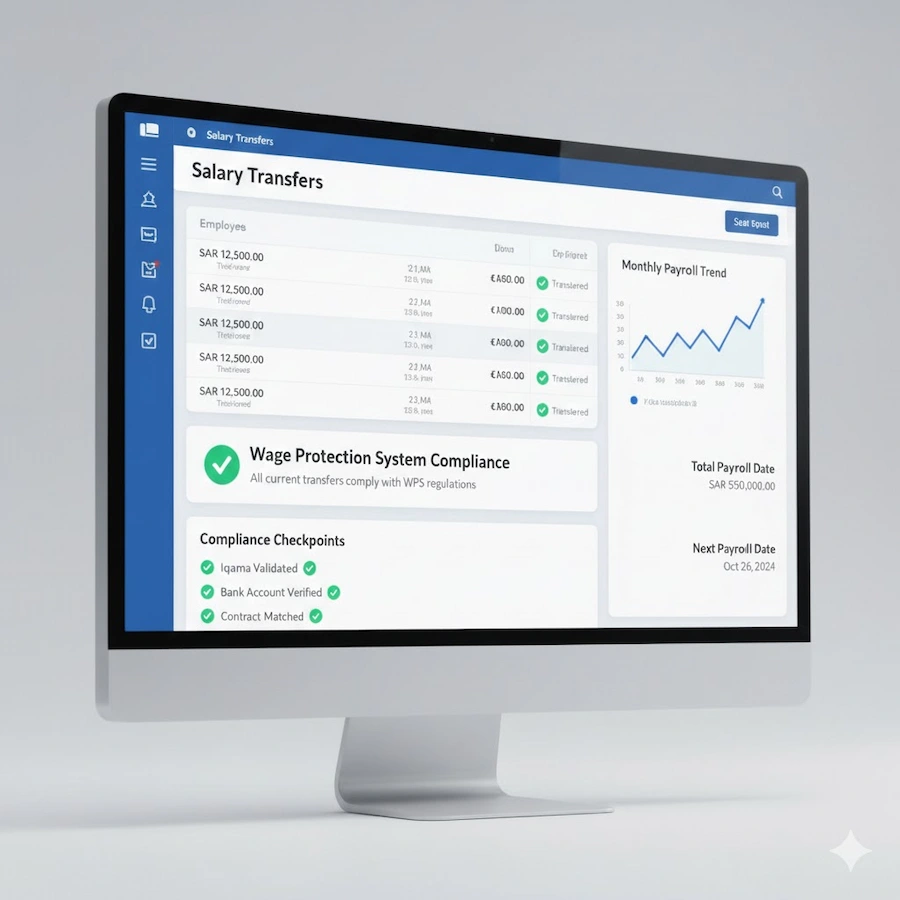
Saudi Arabia’s WPS requires employers to pay employees electronically within specified deadlines. WPS submissions must reflect current salary information. Employers who do not adhere to WPS can face penalties, restrictions, or service suspensions.
End-of-Service Benefits
Saudi labour law entitles eligible employees to end-of-service awards computed based on length of service and last drawn salary. These calculations must be precise and compliant.
Statutory Deductions and GOSI
Contributions to the General Organisation for Social Insurance (GOSI) are mandatory and must be deducted correctly from payroll each cycle. GOSI provides social and retirement protection to eligible employees.

Learn more about: How Hr Tech Saudi Arabia Is Redefining Workforce Management
Best Practices for Payroll Management KSA
To ensure effective payroll management in Saudi Arabia, implement these practices:
1-Automate Payroll with Reliable Software
Automating payroll reduces manual errors and ensures consistency in repeated payroll cycles. Modern systems also integrate with attendance systems and HR platforms.
2-Stay Updated on Law Changes
Labour law and payroll compliance standards evolve. Regular monitoring of Saudi labour law updates and WPS requirements is vital for continued compliance.
3-Maintain Accurate Employee Records
Payroll accuracy depends on correct data on employment contracts, salaries, allowances, leaves, overtime, and deductions.
4-Audit Payroll Regularly
Conduct monthly or quarterly audits to catch discrepancies, reconcile accounts, and prepare for internal or external reviews.
Technology and Payroll Management KSA
Payroll software has transformed how businesses manage salary processing. In the Saudi market, payroll tools are tailored to local requirements, including compliance with Mudad, WPS, GOSI, and more.
Benefits of Payroll Automation Tools
- Centralises employee data and timesheets
- Auto-calculates gross-to-net pay
- Generates statutory reports and payslips
- Eliminates spreadsheets and human errors
- Ensures compliance with Saudi regulations
Many payroll systems also connect directly with banks for seamless salary transfers and offer cloud-based accessibility for HR teams.
Challenges in Payroll Management KSA
Even with software, payroll management comes with challenges:
1-Regulatory Complexity
Saudi payroll law has detailed requirements around wage protection, social insurance, and registration that organizations must interpret correctly.
2-Multinational Workforce
Employers with both Saudi nationals and expatriates must handle diverse payroll elements, including contractual differences, benefits, and compliance obligations.
3-Data Accuracy
Payroll accuracy depends heavily on accurate input from attendance and HR systems. Errors in these upstream processes cause payroll mismatches.
Payroll Outsourcing: A Strategic Option
For many firms, especially those without local payroll experience, outsourcing payroll management to external specialists helps:
- Maintain legal compliance
- Ensure timely employee pay
- Reduce administrative burden
- Access domain expertise and automated technology
Outsourcing providers in Saudi Arabia often handle everything from setup to compliance reporting and payslip delivery, giving leadership more time to focus on core business functions.
Payroll Compliance Checklist for KSA Businesses
Here’s a practical compliance checklist to streamline payroll management:
- Registered entity with the necessary Saudi government bodies
- Employee contracts are formally registered
- Accurate attendance tracking linked to payroll
- WPS reporting is submitted monthly
- Statutory contributions (e.g., GOSI) are calculated and remitted
- End-of-service benefits documented and ready
- Payroll records retained for audit purposes
Following such a checklist reduces risk and improves trust between employers and employees.
Also learn about: The advantages of Saudi Arabia company incorporation
Emerging Trends in Payroll Management KSA
Cloud-Based Payroll Platforms
Cloud payroll solutions are gaining traction due to ease of access, scalability, and integration with HR systems.
AI and Analytics
Artificial intelligence is beginning to assist in error detection, anomaly alerts, and payroll forecasting. Although still emerging, analytics adds strategic insight to payroll functions.
Mobile Payroll Access
Allowing employees to review payslips and payroll records via mobile apps boosts transparency and employee engagement.
Integration With Broader HR Systems
Payroll is increasingly integrated with performance management, time-tracking, and HRIS solutions to create seamless workforce management.
Common Payroll Mistakes to Avoid
To optimise payroll management KSA, businesses should avoid:
- Manual spreadsheet payroll maintenance
- Ignoring regular compliance updates
- Delays in WPS submissions
- Inaccurate GOSI deductions
- Miscalculations of end-of-service benefits
Ensuring a proactive payroll strategy helps safeguard your business and builds trust with your workforce.
Key Benefits of Partnering with Motaded
- Comprehensive Local Expertise: We offer deep knowledge of Saudi Arabia’s regulatory environment, including HR, payroll management, and government compliance, helping businesses navigate complex local requirements smoothly.
- End-to-End HR & Payroll Services: Through its HR services, Motaded supports payroll processes, recruitment, visa issuance, and employee record management, streamlining workforce administration under one roof.
- Time and Administrative Savings: Outsourcing to us reduces time spent on internal payroll setup and compliance tasks, allowing companies to focus on core business growth and strategic priorities.
- Risk Mitigation and Compliance Assurance: We help ensure that payroll, wage protection system (WPS) submissions, and related HR compliance are handled accurately, lowering the risk of fines or regulatory issues.
- Simplified Market Entry and Expansion: For foreign investors, Motaded’s business setup and consultancy offerings make it easier to enter or scale in the KSA market with services like Saudi partner matchmaking and government relations.
- Integrated Service Portfolio: Clients gain access to a broad suite of business services (from consulting to translation and free zone support), creating a unified support ecosystem that enhances operational efficiency.
- Enhanced Brand Trust: Working with a locally established firm like Motaded signals reliability and commitment to quality, which can boost credibility with clients, partners, and employees.

FAQs About Payroll Management KSA
Here are frequently searched questions:
What is the ideal payroll cycle frequency in Saudi Arabia?
Saudi payroll cycles vary by company, but common practices include monthly and bi-monthly cycles. Employers must declare timely wages under WPS.
How do payroll and HR functions integrate for compliance?
Payroll must sync with HR information systems to ensure accurate attendance, leave records, and employee status before salary calculations, a gap often missed in many organizations.
Are payroll taxes charged on employee income in Saudi Arabia?
There is no personal income tax for employees in Saudi Arabia, but employers may handle social insurance and related contributions.
Can foreign companies process payroll without a local entity?
Without a registered entity, foreign businesses must comply via local partners or Employer of Record services, which is a common question among expanding multinationals.
How should payroll data be retained for audits?
There is a practical need to retain payroll records for several years for audit readiness, but official retention periods are partly unclear in public guidelines.
Conclusion
Payroll management KSA is a strategic function that ensures accurate employee compensation, deep compliance with Saudi labour and wage regulations, and operational stability. If you’re ready to optimise your payroll management in KSA, ensure full compliance, and streamline your salary processes effectively, our expert team is here to help.
Contact us today for personalized support, whether you’re setting up payroll for the first time or upgrading your current system.
Reach out now and let’s take your payroll operations to the next level!