Business Setup in Saudi Arabia 2026 | Sovereign Setup Services - Motaded
Overview for Business setup in Saudi Arabia:
Business setup in Saudi Arabia is a strategic gateway for investors into the region's largest economy. At Motaded we are the leading business setup consultants in saudi arabia, we provide integrated solutions covering all legal and logistical aspects, from drafting Articles of Association in Saudi Arabia to obtaining final licenses, ensuring a launch aligned with Vision 2030 and your company setup in riyadh.
Main Content of company formation in saudi arabia:
The journey of business setup in saudi arabia requires a studied Market Entry Strategy in KSA. we accompany you through the Starting a company in Saudi Arabia journey using a studied Market Entry Strategy in KSA. The process begins with securing an Investment License in Saudi Arabia via the Ministry of Investment, followed by documentation at the Ministry of Commerce in Saudi Arabia. We ensure investors benefit from Freedom of Ownership in Saudi Arabia 100% Foreign Ownership laws, with full ZATCA integration to maintain compliance with Taxes in Saudi Arabia. Our goal is to simplify Business Operations in Saudi Arabia so the General Manager can focus on growth and Professional Staff in Saudi Arabia development through our company formation in saudi arabia services.
Strategic Objectives for company incorporation in saudi arabia:
We aim to set the highest standards for business setup in saudi arabia through these goals
1. Encourage Invest in Saudi Arabia: Create a secure environment for global companies with protection from a Legal Consultant in Saudi Arabia.
2. Maximize RHQ Benefits: Enable companies to move administrative weight to Riyadh via the Regional Headquarters program for tax exemptions and company incorporation in saudi arabia.
3. Establish 100% Foreign Ownership: Grant foreign investors full control over Companies without local partners in vital sectors.
4. Ensure Cash Flows in Saudi Arabia Efficiency: Guide financial management to optimize liquidity and comply with SAMA standards when you establish company in saudi arabia.
5. Develop Professional Staff in Saudi Arabia: Build specialized teams capable of operational leadership and Ministry of Human Resources compliance.
6. Facilitate Market Entry Strategy in KSA: Minimize entry risks through analytical studies linking Ministry of Investment requirements with local market needs.
7. Achieve ZATCA Compliance: Ensure registration in the Value Added Tax in Saudi Arabia system to avoid financial penalties.
8. Strengthen Presence in Integrated Logistics Special Bonded Zone: Attract global firms to leverage cross-border supply chain efficiencies.
9. Implement Saudi Corporate Compliance Services: Build entities adhering to high governance and transparency standards per KSA regulations.
10. Empower the General Manager: Provide executive leadership with the legal authority to manage and expand Companies internationally.
Steps for establish company in saudi arabia:
1. Document Authentication (Apostille): Attest investor documents via embassies and MOFA to officially begin Saudi company incorporation.
2. Issue MISA license: Apply via the Ministry of Investment (Note: The 12,000 SAR first-year and 62,000 SAR subsequent fees are currently suspended until further notice).
3. Draft Articles of Association: Formulate and approve the charter electronically via the Ministry of Commerce.
4. Extract Commercial Registration: Issue the main CR and link it to relevant authorities for operational launch, ensuring a compliant business setup in saudi arabia.
5. Activate MHRSD Files: Open the labor file and activate the Qiwa platform for contract and staff management.
6. Register with ZATCA: Activate Tax, Zakat, and VAT accounts to ensure financial compliance from day one.
7. Document National Address via Ejar: Register the physical office to link with Balady Platform in Saudi Arabia for municipal permits.
8. Issue General Manager Visa: Begin recruitment and residency procedures via Iqama Issuance and Renewal Services.
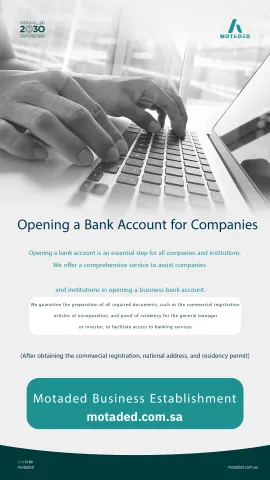
9. Open Bank Account: Complete Opening a Bank Account in Saudi Arabia to transfer capital and manage official payroll.
Work Scopes: Business Setup Process in Saudi Arabia
Our dedicated team covers all requirements for a professional business setup in saudi arabia:
1. Consultancy on Investment Systems in Saudi Arabia: Provide precise analysis of investment laws to maximize investor benefits.
2. Manage Company Registration: Oversee all administrative steps with the Ministry of Commerce for accurate data and a smooth business setup process in saudi arabia.
3. Activate PRO Services in Saudi Arabia: Execute electronic and field government transactions to accelerate licensing for foreign companies.
4. Formulate HR Governance in Saudi Arabia: Build internal labor bylaws ensuring staff stability and KSA Labor Law compliance.
5. Support Financial Procedures: Facilitate sovereign financial operations and link to the Wage Protection System.
6. Provide Legal Translation Services: Translate all contracts and official documents for clear understanding by the General Manager.
7. Manage Commercial Service Offices: Provide administrative representation and office services for delegations and meetings during your company setup in riyadh.
8. Activate Real Estate Developer License: Support real estate firms in obtaining specialized development and project management permits.
9. Coordinate Insurance Brokerage License: Assist brokerage firms in meeting SAMA requirements for operational licenses.
10. Industrial Support: Facilitate the Ministry of Industry support, including reduced Work Permit fees (down from 9,700 SAR to 100 SAR) for the industrial sector.
"We provide the most reliable path for your business setup in saudi arabia. Partner with professional business setup consultants in saudi arabia to ensure your commercial success."

Beneficiary group
- Entrepreneurs and Small-to-Medium Enterprises (SMEs) International firms expanding their service operations and looking into foreign business setup in Saudi Arabia.

Service Duration
- The approval process for a Service License typically takes between 2 to 4 weeks, depending on the completion of necessary documentation and compliance with regulatory requirements.

Encourage the growth of the service sector to boost Saudi Arabia's economy in alignment with Vision 2030 and simplify your business setup in saudi arabia.

Support the development of professional and knowledge-based services in Saudi Arabia, with an emphasis on business setup in KSA .

Facilitate foreign investment by offering incentives and a streamlined process for business setup Process in Saudi Arabia.

Get a company in Saudi Arabia without any Saudi partner and with a percentage of 100% within 3 working days for a Ministry of Investment license

Legal recognition to operate within Saudi Arabia’s expanding service sector as part of a professional business setup in saudi arabia.

100% foreign ownership is permitted for service-oriented businesses in certain free zones.

Access to Saudi Arabia’s fast-growing market with numerous opportunities across various sectors.

Eligibility for government incentives like tax exemptions, business registration in Saudi Arabia , and simplified regulations.

The ability to obtain investor visas and work permits for employees.

Access to Saudi Arabia’s robust infrastructure and proximity to global markets.
Favorable investment climate , supported by ongoing developments as part of the Vision 2030 program.
Frequently Asked Questions (FAQs)
- What is the benefit of a MISA Investment License?
It allows 100% foreign ownership and access to Ministry of Investment incentives.
- Is a physical office required for Starting a company in Saudi Arabia?
Yes, documented via Ejar to link with your CR.
- Are MISA fees still high?
Currently, the 12,000 SAR (1st year) and 62,000 SAR (subsequent years) fees are suspended until further notice.
- How does a Legal Consultant in Saudi Arabia help?
By advising on the best legal structure and drafting the Articles of Association
- What is the role of the Ministry of Commerce?
Issuing the Commercial Register and approving trade names.
- Can I get an Instant License Issuance?
Yes, for specific commercial activities to accelerate business launch.
- How do I register with ZATCA?
Registration occurs immediately after CR issuance to ensure Value Added Tax compliance.
- Why establish a Regional Headquarters (RHQ)?
To gain tax incentives and priority in government tenders.
- Is 100% Foreign Ownership available?
Yes, in most sectors except for a limited "negative list."
- How to perform Opening a Bank Account in Saudi Arabia?
Requires a CR, MISA license, and GM ID per SAMA rules.
- What is the Wage Protection System?
A system monitoring salary payments to protect employee rights.
- How do PRO Services help?
They manage all government relations, iqamas, and permit renewals.
- Is there support for the Industrial sector?
Yes, Work Permit fees are reduced from 9,700 SAR to 100 SAR for industrial licenses.
- Are Legal Translation Services available?
Yes, for all charters and legal documents required by authorities.
- What are Professional Licenses?
Specialized permits for engineering, medical, or accounting consultancies.
- How to manage Taxes in Saudi Arabia?
By complying with WHT, CIT, and VAT per ZATCA standards.
- What is Qiwa?
The primary platform for labor contracts, visas, and Saudization management.
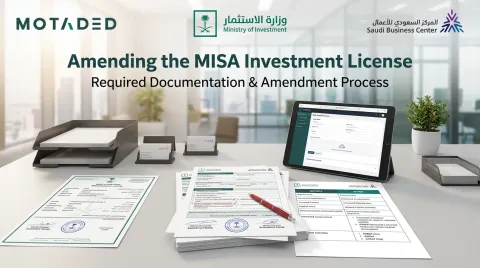
- Can I perform Amending the MISA Investment License?
Yes, to add activities or modify capital.
- What is the Cost of starting a business in Saudi Arabia 2026?
It varies by sector; consult our 2026 guide for details.
- How does HR Outsourcing help?
It reduces costs by delegating recruitment and Professional Staff management.
- What is the Integrated Logistics Special Bonded Zone?
A zone offering tax and customs incentives for global logistics firms.
- Why choose Motaded?
We provide a full Market Entry Strategy ensuring security and speed.
- What is the duration to obtain a Service License in Saudi Arabia?
The process usually takes 2 to 4 weeks
- What are the basic requirements for Setting up a business in Saudi Arabia?
- Commercial registration certificate
- Articles of association
- Financial statements for the last year (note that the total for the company does not matter)
- Can foreign companies apply?
Yes, foreign companies can apply for a service license and register a foreign company in Saudi Arabia.
- Do I need a physical office to apply for a Service License?
Yes, proof of a business address is required, which can be through a lease or virtual office agreement.
- Can I apply for a Service License remotely?
Yes, documents can be submitted online, though some physical verification may be required during the process.
- What sectors are eligible for a Service License?
Eligible sectors include consultancy, IT, marketing, legal services, and others related to business setup for foreigners in Saudi Arabia.
- What incentives are available for businesses with a Service License?
Businesses with a service license may benefit from tax exemptions, streamlined processes, access to investor visas, and government-backed initiatives supporting foreign investment in Saudi Arabia.
- What are the next steps after obtaining the license?
After obtaining the license, you can start hiring employees, signing contracts, and conducting business in Saudi Arabia legally.
- How much does it cost to obtain a Service License?
Costs vary depending on the type of business, with applicable government fees during the application process.

Beneficiary Group
Entrepreneurs and Small-to-Medium Enterprises (SMEs)
International firms expanding their service operations and looking into foreign business setup in Saudi Arabia

Service Duration
The approval process for a Service License typically takes between 2 to 4 weeks, depending on the completion of necessary documentation and compliance with regulatory requirements.